
ISS crew prepares November 5 spacewalk for final roll-out solar array
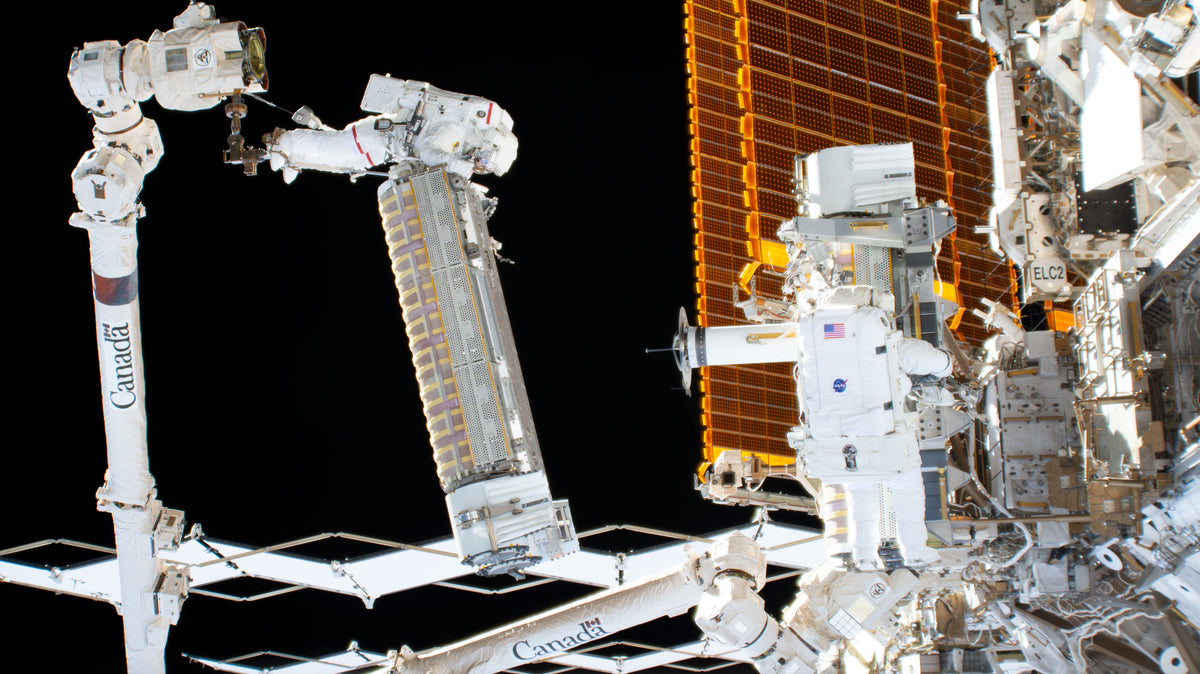
NASA says Anil Menon and Joshua Kutryk are preparing to install the eighth iROSA on November 5. The new solar wings supplement the station’s older arrays.
The International Space Station crew is preparing for a November 5 spacewalk to install the eighth and final array in its current roll-out solar upgrade. NASA’s November 3 update describes tools being staged and safety tethers inspected ahead of the planned work.
NASA astronaut Anil Menon and Canadian Space Agency astronaut Joshua Kutryk are scheduled to begin at 8:30 a.m. EST (13:30 UTC), with about seven hours allocated. Their target is the station’s starboard, or right-hand, truss and its 3B power channel. The installation remains a plan, not a completed result. NASA’s latest preparation report also says the pair reviewed procedures on November 3.

A power upgrade built in stages
The upcoming job follows the October 29 installation of the seventh array on the port-side 2A power channel. Menon and Kutryk completed that spacewalk in seven hours and 11 minutes.
The first six International Space Station Roll-Out Solar Arrays, known as iROSAs, were installed between 2021 and 2023. NASA subsequently requested another pair. These are additions to an ageing power system: sunlight provides the electricity needed for the station’s equipment and scientific work. NASA’s technical overview traces the upgrade back to a smaller technology demonstration flown in 2017.
How a solar wing fits into a roll
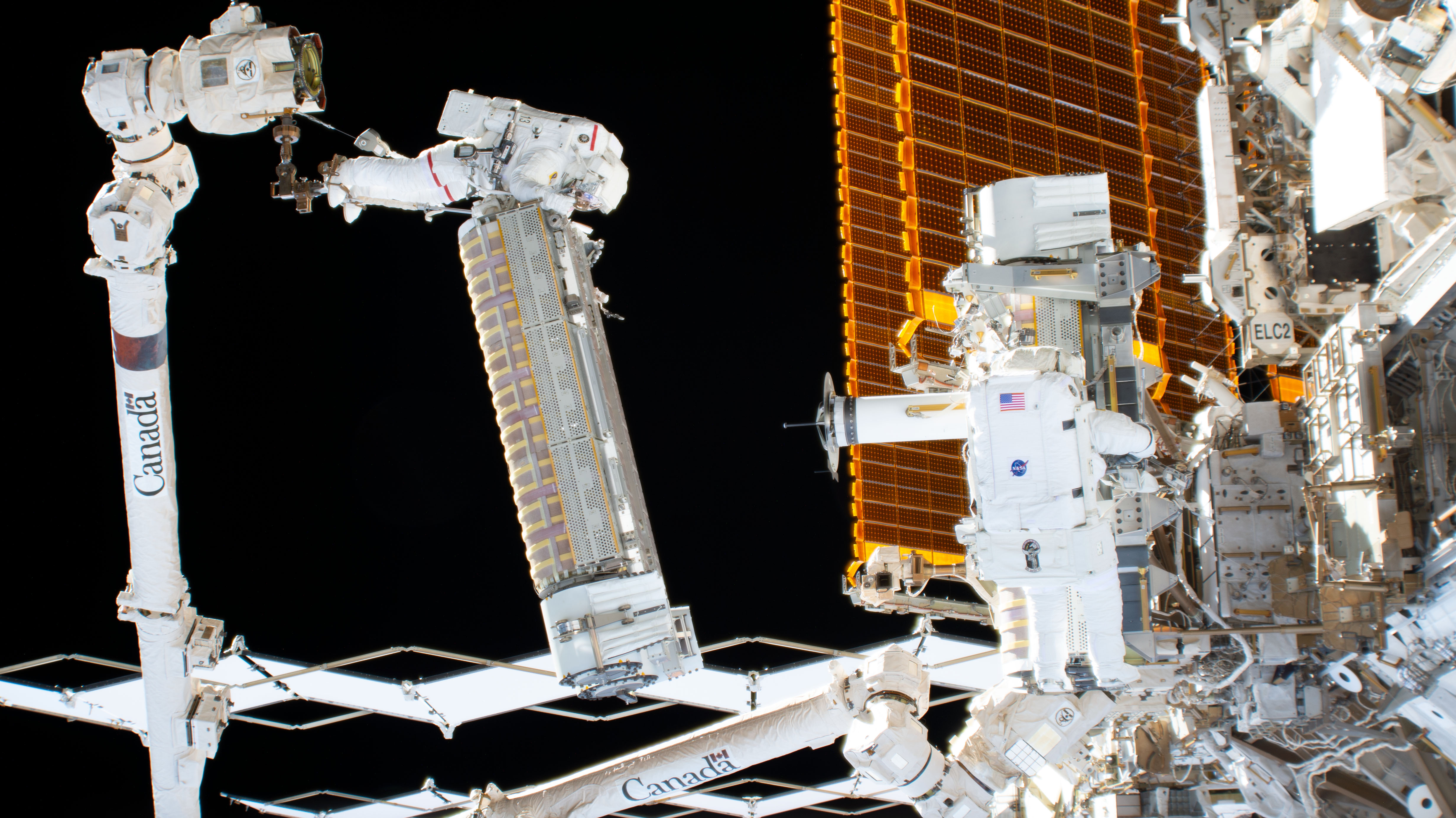
A large collecting surface is useful once in orbit but awkward to launch. The roll-out design packages a flexible blanket of solar cells into a compact cylinder. Composite support booms store elastic strain energy while rolled; releasing that stored energy helps unfurl the array, rather like a spring straightening. Once deployed, the booms also support the blanket. NASA explains the deployment mechanism here.

The new wings supplement the station’s original arrays. They sit in front of portions of the older wings, while exposed areas of the original panels keep producing electricity. That distinction matters: adding an iROSA does not mean removing an entire original wing. NASA’s earlier engineering explanation describes how the new hardware uses the existing tracking and electrical distribution system.

Robotics and people share the work
Canadarm2 is part of the installation team. The Canadian Space Agency’s October 20 preview describes moving each rolled array from the station’s Mobile Base to its worksite with the arm. Jessica Watkins and Luke Delaney are assigned to operate it from inside, with Canadian robotics specialists supporting from the ground. The procedures were rehearsed underwater and in simulators.
For now, November 5 is the scheduled next step. Successful installation would complete the eight-array upgrade described in NASA’s current plan; confirmation will require a subsequent mission report. This article was checked against primary agency updates on November 3, 2026, Pacific time.
Join the conversation