My shopping cart
Your cart is currently empty.
Continue ShoppingBy SpaceEve Newsroom
Published: December 2025
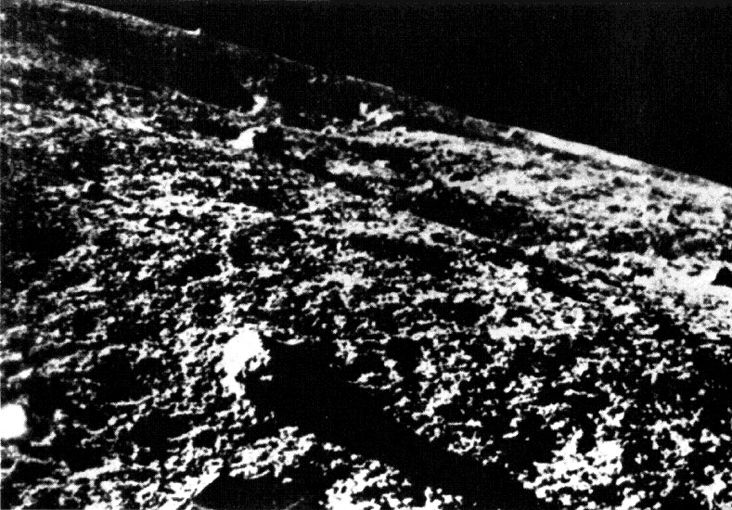
Image credits: NASA / Soviet Space Program archives
Humanity’s relationship with the Moon was built step by step, through a series of unprecedented firsts. A photographic collection curated by The Atlantic brings these milestones together, documenting how robotic probes and astronauts transformed the Moon from a distant light in the sky into a visited world.
Original photo essay: The Atlantic – A Collection of Lunar Firsts
https://www.theatlantic.com/photo/2019/01/photos-a-collection-of-lunar-firsts/579409/

Image credit: Soviet Space Program
In 1959, the Soviet spacecraft Luna 2 became the first human-made object to reach the Moon, impacting its surface after a three-day journey. The mission proved that interplanetary travel beyond Earth orbit was possible and marked the true beginning of lunar exploration.
Image credit: Soviet Space Program
In 1966, Luna 9 achieved the first successful soft landing on the Moon and transmitted the first photographs taken directly from its surface. The images confirmed that the lunar ground could support spacecraft, easing concerns that landers would sink into deep dust.

Image credit: NASA
Apollo 8 carried humans beyond Earth’s gravitational hold for the first time in 1968. As the spacecraft orbited the Moon, astronaut William Anders captured the iconic Earthrise photograph, reshaping humanity’s view of its home planet and highlighting Earth’s fragility against the vastness of space.
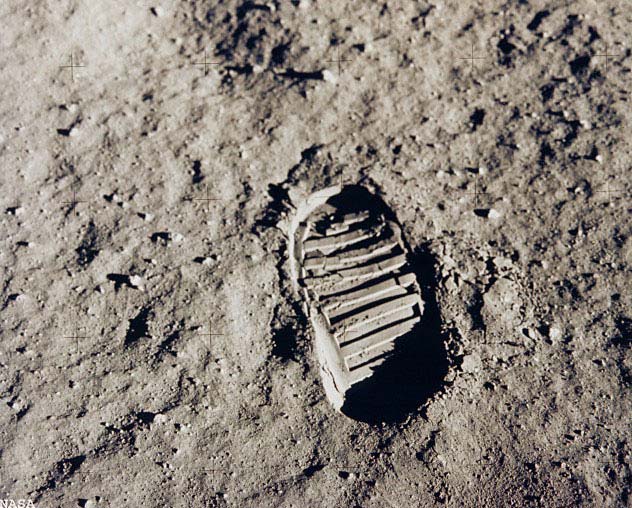
Image credit: NASA
On July 20, 1969, Apollo 11 astronauts Neil Armstrong and Buzz Aldrin became the first humans to walk on the Moon. The mission represented the culmination of years of technological, political, and scientific effort, turning centuries of speculation into reality.


Image credit: NASA
Following Apollo, robotic missions and later crewed expeditions expanded lunar science. Surveyor landers studied soil mechanics, while later Apollo crews deployed rovers, seismic instruments, and reflectors that are still used today for precision laser measurements from Earth.
The Moon remains a proving ground for exploration beyond Earth. Each early success shaped mission design, navigation, landing techniques, and human operations in deep space. Today’s plans for sustained lunar activity and future missions to Mars trace their foundations directly to these early milestones.
The images collected by The Atlantic serve as a visual record of humanity’s first steps into a broader cosmic neighborhood.
The Atlantic – A Collection of Lunar Firsts
https://www.theatlantic.com/photo/2019/01/photos-a-collection-of-lunar-firsts/579409/
NASA History Office – Apollo and Lunar Exploration
Soviet Space Program Archives


