
Why Mars looks red, but its rocks are not all red
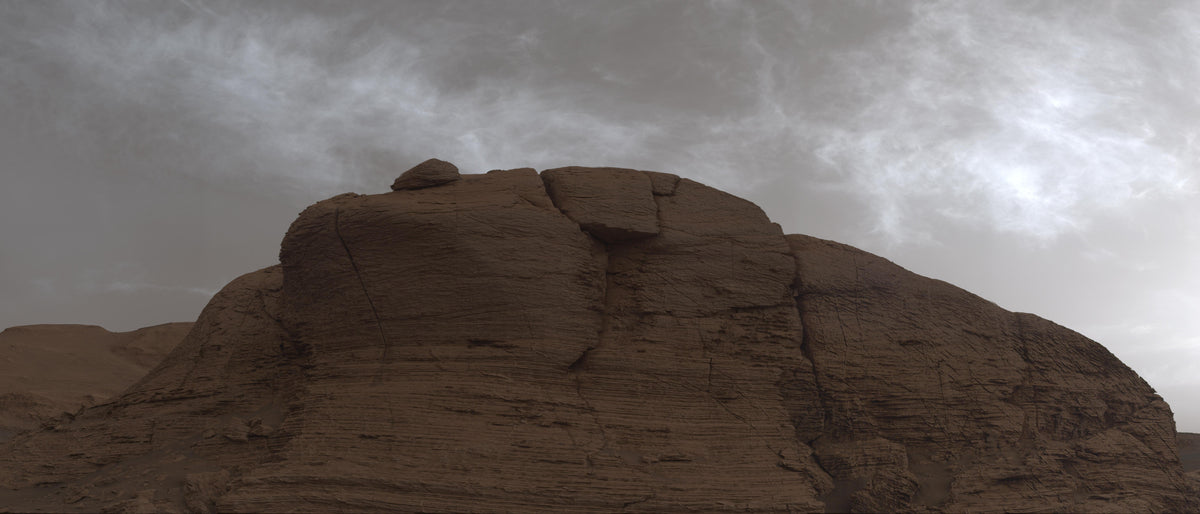
Oxidized iron minerals colour fine dust that coats and circulates around Mars. Rover samples reveal a more varied planet beneath that familiar appearance.
Mars gets much of its reddish appearance from fine dust containing oxidized iron minerals. That dusty coating, spread across the ground and lifted into the atmosphere, can dominate our view without making every rock beneath it red.

A planet-wide appearance from fine material
Iron is part of the chemistry of Martian rocks. When it reacts with oxygen-bearing substances, it can form different iron oxides and related minerals. These altered materials help give the dust its rusty colour. The comparison with rust describes the chemistry; it does not mean modern Mars has Earth's wet, oxygen-rich conditions.
Winds break up, mix and redistribute surface material. Dust also enters the atmosphere, helping make Mars look broadly reddish from a distance. Up close, the ground includes brown, tan, gold and gray materials. A thin, widespread coating can make a diverse landscape look more uniform.
Curiosity found a different colour inside a rock
In February 2013, Curiosity drilled a rock named John Klein in Gale Crater. Its Mastcam photograph shows gray-green powder in the rover's scoop, alongside red residue left by an earlier dust-and-sand sample from Rocknest.

The mission team's description of the sample connects that difference to the oxidation state of iron: the John Klein powder was less oxidized. Gray material can still contain iron. Colour depends on its chemical form and surrounding minerals, rather than simply on whether iron is present.
Which kind of rust colours the dust?
Iron oxides are a family of materials, rather than a single red ingredient. Identifying their exact mixture matters because different minerals can record different environmental histories.
A study published in Nature Communications on February 25, 2025 compared orbital and rover spectra with laboratory mixtures. Its authors found that very fine ferrihydrite mixed with basalt and sulfate best matched Martian dust observations. Ferrihydrite is a water-bearing iron mineral, so they interpreted its persistence as evidence for ancient cold, wet alteration followed by drying.
That is a reconstruction based on mineral signatures, experiments and calculations. It does not establish water flowing today or evidence of life. The mission account of the research explains why the mineral question goes beyond the simple label “rust.”
Reading the colours in rover pictures
Lighting, camera response and image processing also affect colour. The scoop image is white-balanced to show materials under Earth-like illumination. The Mont Mercou landscape is a separate, colour-corrected mosaic from 2021, taken after sunset; its appearance should not be compared with the 2013 powder as if they were matched samples.
Pictures reveal useful contrasts, but instruments that measure how light varies with wavelength, and tools that analyse composition, provide stronger tests of mineral identity. Mars's red appearance is a clue to widespread surface alteration, not a complete description of the planet's rocks.
Join the conversation