
As Hera nears its asteroid target, DART’s biggest questions remain open
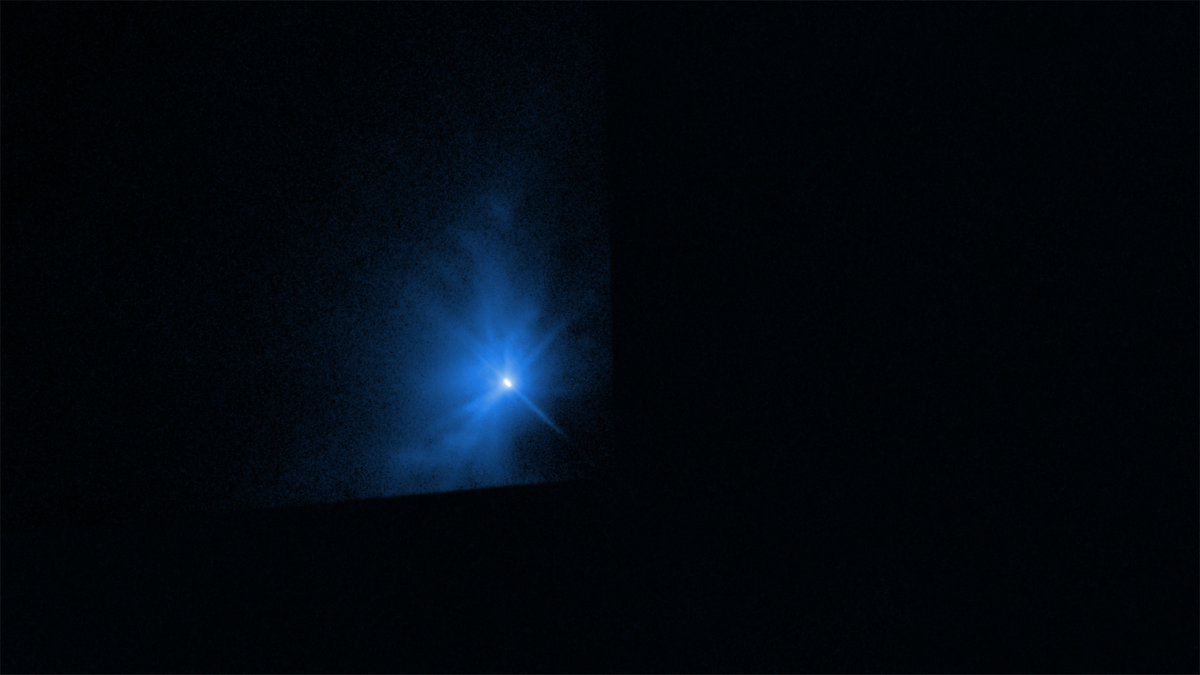
ESA’s November 3 mission preview sets out what Hera must learn at Dimorphos: how the impact reshaped it, what lies inside and how much momentum the collision delivered.
Europe’s Hera spacecraft is approaching the asteroid system where NASA deliberately crashed a probe in 2022. In a mission preview published November 3, ESA says Hera is due to arrive this month and outlines the measurements needed to understand why that collision worked so well.

The forthcoming encounter is a follow-up investigation, with major results still ahead. ESA’s October 27 approach report showed that Hera’s camera could distinguish the small target, Dimorphos, from its larger companion, Didymos. The agency said it planned to unveil the first detailed Dimorphos images on November 25.
A shorter orbit is only part of the answer
NASA’s Double Asteroid Redirection Test, or DART, struck Dimorphos on September 26, 2022. The purpose of this kinetic-impact experiment was to change an asteroid’s motion by hitting it with a spacecraft. Dimorphos circles Didymos, so astronomers could look for a change in the time needed to complete that smaller orbit.
A 2024 NASA-led analysis found that the orbital period eventually settled about 33 minutes and 15 seconds shorter than before the collision. The researchers combined DART imagery, radar measurements and telescope observations. Periodic dips in the pair’s combined brightness, as one asteroid passed in front of or behind the other, helped reveal their motion.
The spacecraft’s own momentum was only part of the push. Rock and dust thrown away from Dimorphos also carried momentum. Their escape produced recoil, strengthening the asteroid’s response. NASA’s post-impact reporting identified this ejecta as an important contributor to the deflection.

What Hera needs to measure
That result does not reveal everything about the target. The same momentum change produces a different velocity change in a heavier object than in a lighter one. A sharper measurement of Dimorphos’s mass is therefore essential for judging how efficiently the impact transferred momentum.
ESA’s latest preview describes methods including tracking the two asteroids’ motion around their shared centre of gravity and measuring tiny changes in Hera’s radio signal during close operations. Those gravitational measurements can constrain the moonlet’s mass rather than relying only on an estimate from its apparent size.

Structure matters too. Close-up images should help distinguish a local impact crater from more extensive reshaping. The Juventas CubeSat is intended to probe Dimorphos with radar, testing ideas about its interior, including the possibility of large voids. These are questions for the coming investigation, not findings already established by Hera.
From one collision to a usable defence technique
Remote observations have already provided evidence of change. The 2024 NASA-led study inferred a more elongated post-impact shape from models constrained by observations. Hera’s close survey should test and refine that picture; an inferred shape is different evidence from a resolved surface image.
The larger goal is to learn which properties control an asteroid’s response to a collision. Mass, internal arrangement and how strongly material sticks together can change the outcome. DART demonstrated a deflection; Hera is designed to supply the physical detail needed to interpret that demonstration and apply its lessons to other targets.
Join the conversation