
Why the Moon is slowly moving away from Earth
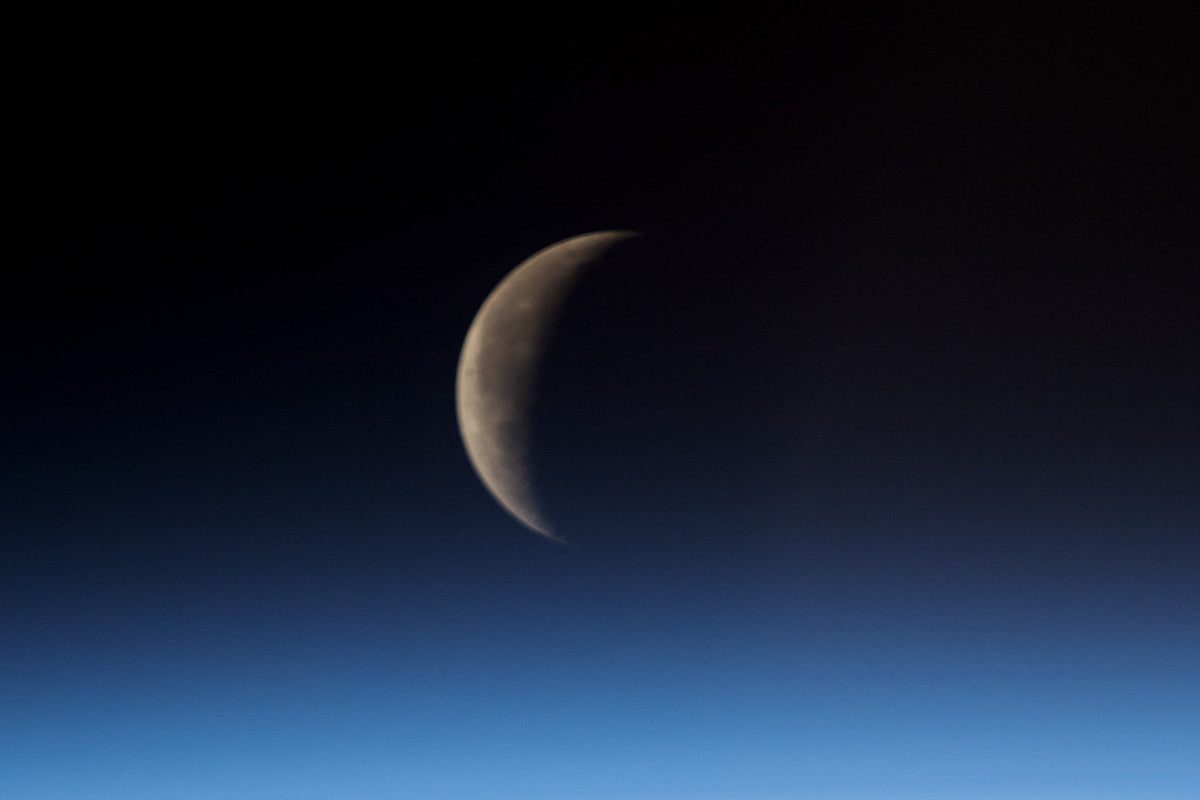
Laser measurements reveal that the Moon’s mean distance grows by about 3.8 centimetres a year. Tidal interactions transfer angular momentum from Earth’s spin to the lunar orbit, while gradually slowing our planet’s rotation.
The Moon’s mean distance from Earth is increasing by about 3.8 centimetres per year, a long-term trend revealed by laser measurements. The cause is a continuing exchange between Earth’s rotation and the Moon’s orbit, driven by their gravitational interaction through tides.

Tides connect Earth’s spin to the lunar orbit
The Moon’s gravity acts slightly differently across Earth, deforming the planet and redistributing ocean water. A simplified picture represents that distortion as two tidal bulges. Real oceans are more complicated: continents, water depth and weather help determine the tides at a particular coast. NASA’s tides guide explains why a local high tide cannot be predicted just by looking for the Moon overhead.
Earth spins faster than the Moon travels around it. In the simplified tidal picture, friction and Earth’s rotation place the bulge slightly ahead of the Earth–Moon line. Its gravitational pull then exerts a torque on the lunar orbit. The Moon’s pull on the distorted Earth supplies the opposite torque, gradually slowing Earth’s spin.

This transfers angular momentum from Earth’s rotation to the Moon’s orbital motion. Angular momentum describes rotational motion and depends on both motion and how mass is distributed. As the lunar orbit gains it, the mean orbit widens and the time needed to complete an orbit increases. Earth’s day gradually lengthens.
A wider orbit does not mean the Moon must keep travelling faster around Earth. In the approximately circular model, its orbital angular speed decreases as the orbit grows, even though its orbital angular momentum increases. Tidal friction also dissipates energy as heat; this exchange is not a loss-free mechanism.
How a laser measures the change
Scientists send short laser pulses toward special reflectors on the Moon and measure the returning light. Apollo crews placed reflector arrays on the surface, and Soviet Lunokhod rovers carried others. These passive targets return some of the incoming light toward its source, rather than generating their own signal.

The basic calculation uses light’s travel time. Multiply the measured round-trip time by light speed, then divide by two to estimate the distance between the ground station and the reflector. A real measurement requires corrections: the atmosphere affects the pulse, the endpoints move, and Earth and the Moon deform under tides.
Repeating measurements across many years separates a slow trend from the changing geometry. NASA’s laser-ranging report describes how decades of observations revealed the roughly 3.8-centimetre annual increase. The photograph above is context for this explanation; the recession comes from timed measurements, not from comparing the Moon’s apparent size in that picture.
A gradual trend, rather than a daily timetable
The quoted rate concerns the Moon’s mean distance. It is not a promise that every individual range measurement will be farther away than the previous one. Nor should today’s approximate rate be extended unchanged across the Moon’s entire history. NASA’s orbital discussion explicitly cautions that the long-term acceleration need not be constant.
The useful connection is measurable on both sides of the system: a slowly widening lunar orbit and a gradual tidal braking of Earth’s rotation. Precise observations establish the trend; the torque mechanism explains how the two changes belong together.
Join the conversation