
December’s Cold Moon Rises
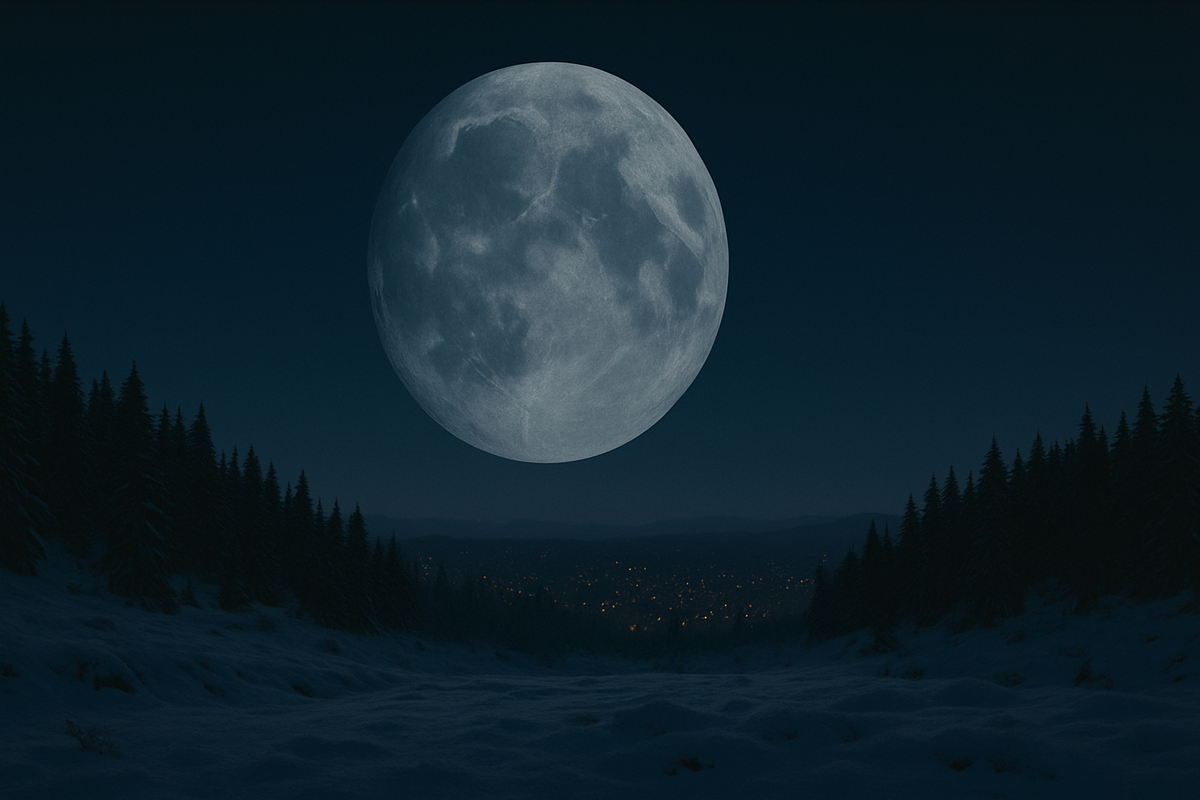
Final Supermoon of 2025 Lights Up the Sky

On December 4, 2025, skies around the world illuminated under the final full moon of the year: the so-called Cold Moon — a stunning blend of lunar beauty, seasonal chill, and cosmic timing. Space+1
Because the Moon passed unusually close to Earth during its monthly orbit (a point astronomers call perigee), this “Cold Moon” also qualifies as a supermoon — making it appear up to 14% larger and 30% brighter than a typical full moon. Space+1
For stargazers, that meant a rare treat: a glowing lunar disk rising at dusk, larger and more luminous than most moons — the perfect final celestial show before the dark deep of winter sets in.

🌌 What Made the 2025 Cold Moon Special
-
Supermoon + Winter Moon = Maximum Impact — The Cold Moon came during the longest nights of the year. Its extra-bright glow lit up cities, landscapes, and horizons across the Northern Hemisphere. Space+1
-
A Celestial Finale for 2025 — It’s the third full moon in a string of supermoons this year, and the final one for 2025. For skywatchers, it’s the last chance this year to witness the Moon at its closest and brightest. Space+1
-
Worldwide Photo-Fest — Photographers everywhere captured jaw-dropping moonrises: the Moon soaring over city skylines, rising above natural landscapes, and glowing behind silhouettes. The Cold Moon delivered a universal canvas for stunning space-art. Space

🔭 When & How to Watch (or See Later)
-
Peak full illumination: December 4, 2025 (exact timing varies by timezone). Space+1
-
Best viewing: Look east at sunset — when the moonrise meets the horizon, you’ll get the biggest, most dramatic view. Once up, the moon stays visible all night. Sky at Night Magazine+1
-
Pro tips:
-
Use binoculars or a small telescope to spot craters and maria — the bright light still lets surface details pop.
-
Try shooting moonrise over a skyline, skyline with trees, or natural foreground — the contrast gives dramatic photos.
-
🎇 A Lunar Show with Room for More
The 2025 Cold Moon is now behind us — but that doesn't mean the sky opens close. Full moons, meteor showers (like the upcoming Geminid meteor shower), planets, and deep-sky objects still await.
If you missed the Cold Moon, keep your binoculars ready: the universe never stops showing off.
Join the conversation