
SpaceX catches Starship after orbital flight, but loses its booster
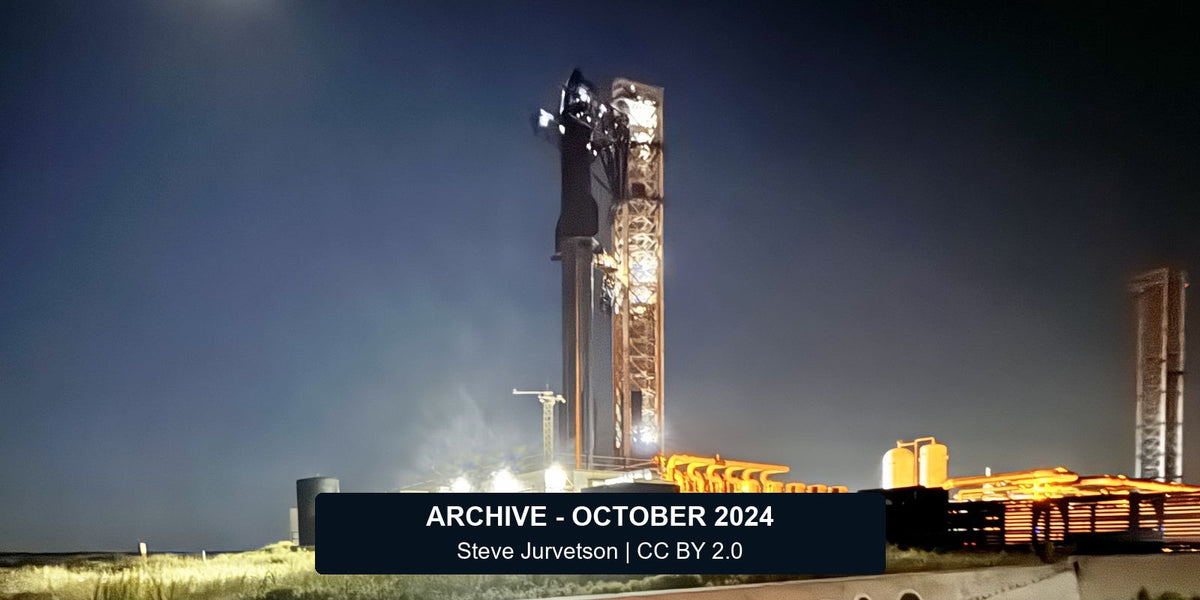
An upper-stage recovery advances Starship's reuse tests. The booster failure remains unresolved, and recovery alone does not demonstrate rapid reflight.
SpaceX caught the Starship upper stage at Starbase on November 14, about 22.5 hours after launch. Its Flight 15 report also describes the Super Heavy booster's loss on November 13.

This was not the planned double recovery: the two stages had different outcomes.
One ship recovered, one booster lost
SpaceX says Super Heavy's boostback burn ended early because of low fuel mass, with the root cause still under investigation. Its guidance, navigation and control system triggered an automated abort and diverted it offshore. A landing burn followed, and the flight termination system activated after engine shutdown.
The abort command should not be conflated with a proven guidance failure. The source leaves the underlying cause open.
The ship continued into orbit and deployed 26 Starlink V3 satellites. After a long coast, it performed a deorbit burn, returned toward Texas and lit three Raptor engines for its landing flip. The tower arms then caught the upper stage for the first time.
Returning from orbit involves three different jobs

A spacecraft cannot come home simply by pointing toward the ground. It must change its orbit, pass through the atmosphere and complete the final landing. These phases use different physical processes, which is why a successful engine firing alone cannot establish that the whole return will work.
A deorbit burn changes the trajectory so it intersects denser air. The FAA's commercial-space concept of operations describes the associated vehicle checks and orientation changes. The burn begins the return; it does not bring a spacecraft to a stop above the landing site.
Atmospheric entry then creates severe heating as well as deceleration. NASA Ames explains that rapid compression across the shock wave heats the gas ahead of a hypersonic vehicle, which transfers heat to its surface. A heat shield limits that transfer to the structure. Surviving this environment and arriving at the right location are related but separate requirements.
In its November 7 description of the return method, SpaceX explained how the ship's four flaps would guide the atmospheric descent. That preparatory explanation describes the intended mechanics; the November 14 flight report supplies the completed outcome.
The arms finish a powered landing
The tower does not remove orbital speed at the final instant. SpaceX's published method calls for an engine-powered flip to an upright attitude and a controlled approach between the arms. The arms support the vehicle at catch fittings below the forward flaps, with engine shutdown following detected contact.
The propulsion remains essential near the tower. NASA Glenn's rocket-thrust explanation connects thrust to the exhaust's momentum and nozzle pressure. A rocket carries its oxidizer, so its engines can operate during both the airless orbital phase and the atmospheric landing. Steering, thrust and tower timing must work together; the catch is the end of that controlled descent.
A long coast tests more than the heat shield
SpaceX's preflight return criteria covered engine condition, electrical power, communications, flight computers, navigation sensors, tank and feedline integrity, tank pressure and attitude control. The coast therefore tested whether the vehicle could remain ready for the return after hours in space, rather than only immediately after launch.
Those criteria also provided options to end the mission over the ocean. Having a contingency is different from completing the intended recovery, as the booster outcome demonstrates. Neither the successful ship catch nor the booster loss erases the other part of the flight.
Recovery opens the next question: reuse
An intact returned ship gives engineers hardware they can inspect alongside recorded flight data. Damage, wear and the work required to prepare that hardware again will matter to the next stage of development.
A catch is a recovery demonstration. Rapid, economical reuse also requires successful preparation, reflight and repetition. This flight does not by itself establish a turnaround time, launch cost or readiness for every future Starship mission.
Our earlier Flight 15 preview explained the proposed double recovery. The new result is narrower and concrete: the orbital ship returned to the tower, while the booster did not.
Join the conversation