
Vulcan launch fails, losing 40 Amazon Leo satellites
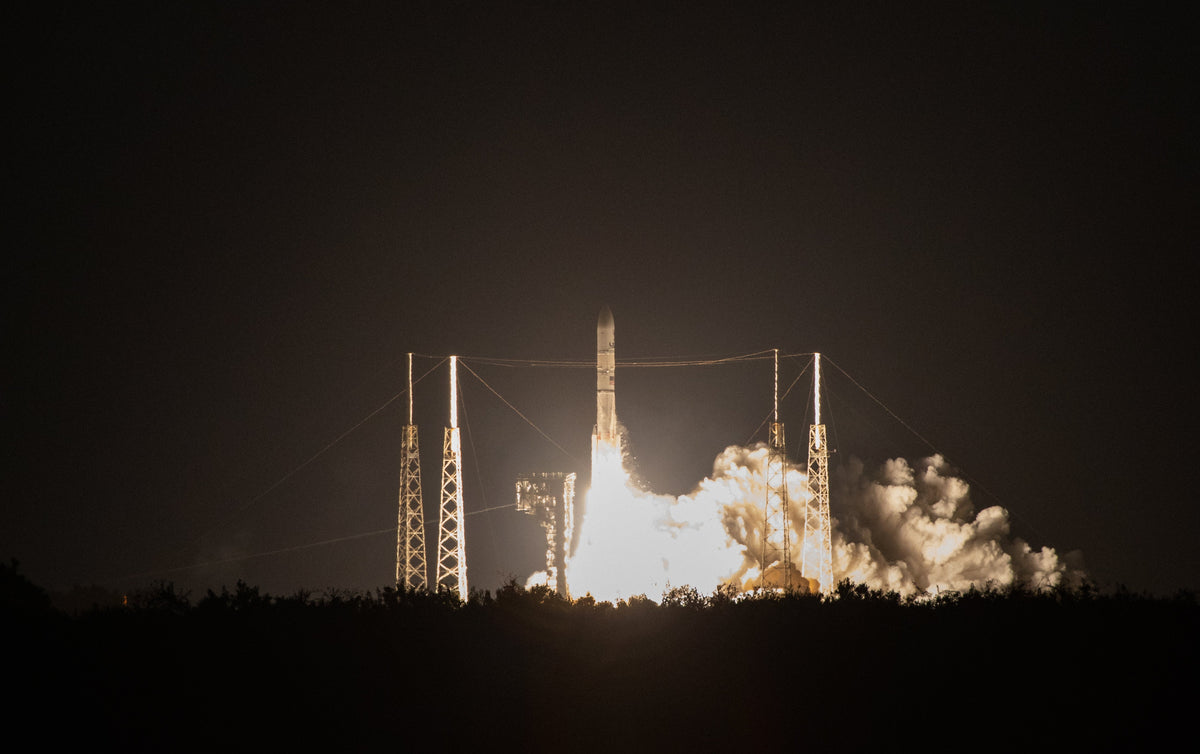
Amazon confirms the payload loss. The failure interrupts the first of 38 contracted Vulcan missions, while the technical cause and return-to-flight timing remain unresolved.
United Launch Alliance's Vulcan rocket failed to deliver 40 Amazon Leo broadband satellites to orbit after launching from Florida on November 15, 2026. Amazon has confirmed that the payload was lost.
The flight was meant to open a major deployment route for Amazon's internet constellation. Instead, it leaves the partners facing a failure investigation before that route can establish a regular launch cadence.
What has been confirmed

Amazon lists Leo Vulcan 1, or LV-01, as launching from Space Launch Complex 41 at Cape Canaveral Space Force Station at 12:40 p.m. Eastern Standard Time on November 15. That was 17:40 UTC.
ULA said an anomaly occurred about 10 minutes into flight and the mission did not reach its intended orbit, according to Spaceflight Now's report quoting the company's statement. The distinction between an outcome and a diagnosis matters: confirmation that the satellites were lost does not establish which component initiated the failure.
The photograph here is explicitly archival. NASA captured it during Vulcan's January 2024 debut carrying the Peregrine lunar lander. It illustrates the launcher, rather than documenting this accident or the configuration flown on LV-01.
Why reaching space was only part of the job

ULA's mission description identifies LV-01 as a Vulcan VC6L with six side-mounted solid rocket boosters and a version of the Centaur V upper stage optimized for low Earth orbit. The central booster uses two methane-fueled BE-4 engines. Centaur uses two RL10 engines burning liquid hydrogen and oxygen.
The stages perform successive parts of a single trajectory. The booster supplies the initial climb and acceleration; after separation, the upper stage continues accelerating the spacecraft toward the required orbital conditions. In a rocket engine, expelling exhaust produces thrust in the opposite direction, as NASA's mechanics guide explains. The direction of that force matters as well as its duration.
An orbit requires a suitable combination of position and velocity. Gravity continues to curve a satellite's path, rather than switching off above the atmosphere. NASA describes this continuing acceleration in orbit. A vehicle can therefore climb high above the launch site and still fail to leave its payload in a useful orbit.
These principles explain what the launch had to achieve. They do not identify what went wrong on LV-01. A problem inherited from an earlier flight phase can also affect a later phase, so the time at which an anomaly is reported is insufficient to assign its cause to a particular stage.
Why this matters for Amazon's network
Before launch, Amazon described LV-01 as the first of 38 contracted Vulcan missions intended to deploy more than 1,500 first-generation satellites. It was the first flight of a shorter Centaur configuration for these missions and Vulcan's first six-booster flight. Those changes were intended to increase the number of satellites carried on each launch.
The significance extends beyond replacing this batch. Amazon built its deployment plan around repeated flights, with dedicated integration infrastructure at Cape Canaveral intended to support overlapping preparations. A launch vehicle awaiting resolution of an accident cannot simply be assumed to maintain its earlier advertised cadence.
Amazon also contracts with other launch providers. Its November 15 mission update still targets an Arianespace flight carrying 36 satellites for no earlier than November 23. That is a separate planned mission, not a completed deployment or proof that every consequence of the Vulcan loss can be absorbed immediately.
What remains unresolved
Spaceflight Now reports that ULA plans to identify the cause and corrective action with its customer and other appropriate organizations. The sources reviewed for this article do not establish a final root cause or a confirmed date for Vulcan's next flight.
That leaves two questions to keep separate: why this rocket failed, and how any resulting changes will affect future missions. Earlier hardware problems, countdown delays and unusual flight behavior can provide investigative leads. None should be presented as the explanation for this loss without supporting findings.
Amazon's confirmation settles the immediate result: 40 spacecraft were lost. Returning Vulcan to dependable service requires the evidence behind the failure to be understood, rather than a timetable inferred from the launch bookings.
Join the conversation