
Voyager 1: Navigating the Cosmos Despite a Computer Glitch

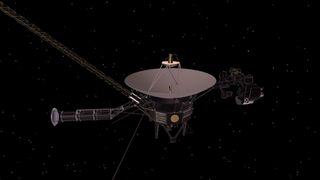
An artist's illustration of the Voyager 1 spacecraft in interstellar space. They mystery of its junk data has been solved, NASA says. (Image credit: NASA)
Introduction
In a testament to human ingenuity and technological resilience, NASA's Voyager 1 spacecraft, now 46 years into its mission, is facing a unique challenge—a communication breakdown due to a computer glitch. Currently exploring the uncharted cosmic territories along the outer reaches of the solar system, Voyager 1 remains a pioneer in interstellar space, boasting a staggering distance of about 15 billion miles away from Earth. Let's delve into the details of this latest cosmic conundrum and the ongoing efforts by NASA engineers to address it.
The Glitch and Communication Breakdown
The mission team first detected the issue on November 14, when Voyager 1's flight data system's telecommunications unit began transmitting a repeating pattern of ones and zeroes, akin to being stuck in a loop. While the spacecraft can still receive and execute commands from the mission team, the glitch in the telecommunications unit prevents the transmission of vital science and engineering data back to Earth. Described as a scenario reminiscent of "Groundhog Day," engineers are diligently working to understand the glitch's underlying cause.
Voyager's Remarkable Journey
Designed with an initial lifespan of five years, both Voyager probes have surpassed all expectations, becoming the longest-operating spacecraft in history. Voyager 1, the farthest spacecraft from Earth, and its twin, Voyager 2, have provided invaluable insights into our solar system and beyond. Despite their unexpectedly extended journeys, these aging spacecraft have encountered challenges, with Voyager 1's current glitch in its flight data system presenting a unique set of obstacles.
The Glitch Resolution Efforts
NASA engineers are actively troubleshooting the glitch, focusing on Voyager 1's flight data system, which collects and bundles information from the spacecraft's science instruments and engineering data. While commands have been sent to restart the system, no usable data has been received yet. The process of gathering more information about the glitch's root cause and determining corrective actions is ongoing and may take weeks.
Unique Challenges of an Aging Voyager
Voyager 1's long-distance location, approximately 15 billion miles away, poses a significant challenge. Commands from Earth take 22.5 hours to reach the spacecraft, and the team must wait an additional 45 hours for a response. As the Voyager probes age, mission team members rely on original manuals written decades ago, facing challenges not foreseen in those early days of exploration.
The Value of Voyager's Extended Mission
Despite the glitch, the Voyager mission remains of immense scientific value. The spacecraft's longevity allows scientists to study particles and magnetic fields as they change in the far reaches of the solar system. While the team hopes to restore the regular flow of data from Voyager 1, its enduring mission stands as a testament to human achievement and the boundless spirit of exploration.
Conclusion
As NASA's Voyager 1 navigates the challenges posed by its recent computer glitch, the mission team's dedication and ingenuity shine through. The spacecraft, far beyond its expected mission lifespan, continues to push the boundaries of exploration, providing humanity with a unique window into the mysteries of interstellar space. In the face of unforeseen obstacles, the Voyager mission exemplifies the resilience and determination that drive humanity's quest for knowledge beyond the confines of our home planet.
Join Space Eve Blog in the exploration of the cosmos and share your passion for space! Have a news tip, correction, or comment? We welcome your input! Feel free to reach out to us at support@spaceve.com. Your contributions help us keep the space community informed and connected.
Join the conversation