
Why the Moon turns red during a lunar eclipse
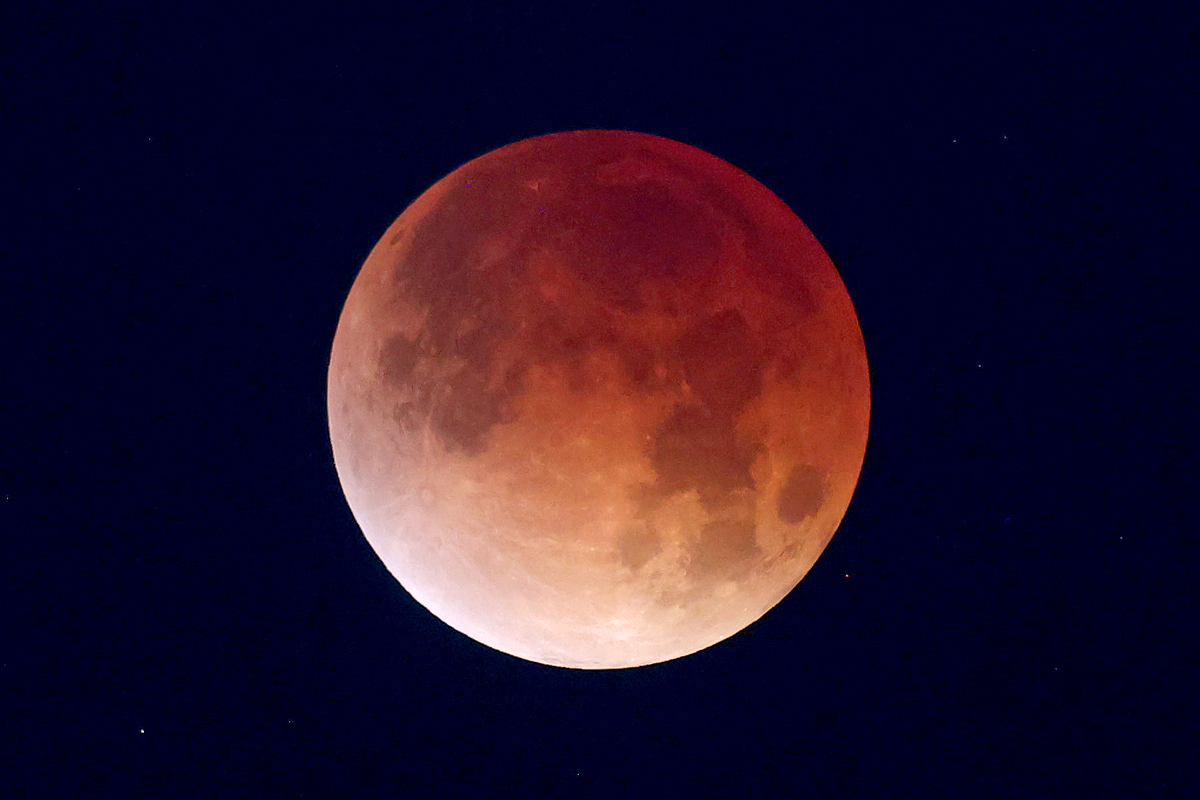
Earth blocks direct sunlight during a total lunar eclipse, but its atmosphere bends and filters a little light into the shadow. That faint illumination can turn the Moon copper-red.
The Moon can glow copper-red during a total lunar eclipse because Earth’s atmosphere sends a little sunlight into our planet’s shadow. The Moon remains a rocky world reflecting light; its surface has not suddenly changed colour.

Sunlight takes a bent, filtered route
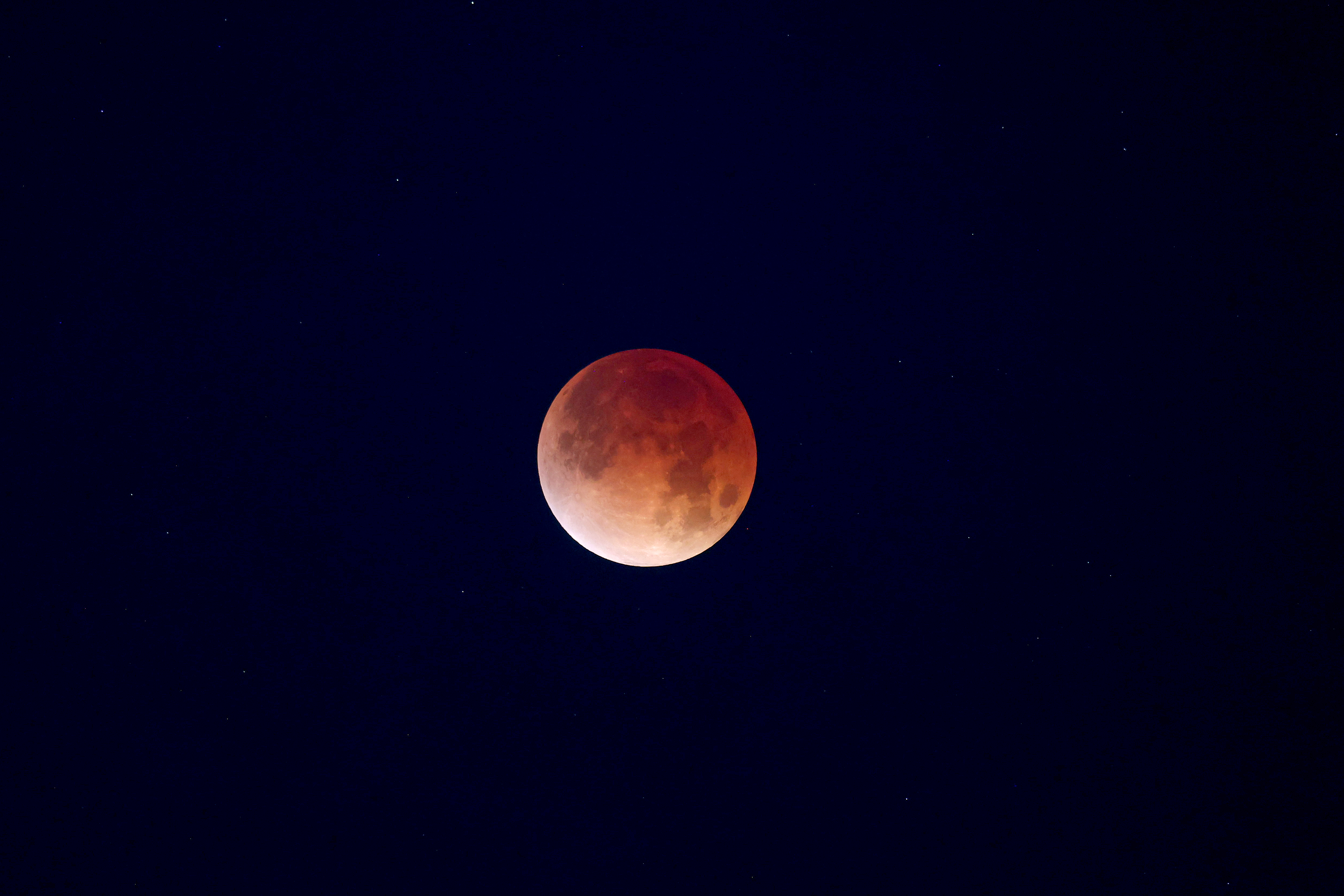
During a lunar eclipse, Earth lies between the Sun and the full Moon. In the central shadow, called the umbra, our planet blocks the Sun’s direct disk. Yet some sunlight passes through the atmosphere around Earth’s edge and bends into the shadow through refraction, as the Canadian Space Agency explains.
Bending and colour filtering are different effects. Air molecules scatter shorter-wavelength blue light more strongly than longer-wavelength red light. After a long path through the air, the transmitted sunlight is comparatively rich in reds and oranges. That dim light reaches the Moon, reflects from its surface and travels back toward observers on Earth. NASA’s eclipse guide connects this filtering to the familiar colours of sunrise and sunset.

A shadow has more than one region
Earth also casts a lighter outer shadow, the penumbra, where only part of the Sun’s disk is blocked. A penumbral eclipse can produce subtle shading. In a partial eclipse, part of the Moon enters the umbra while the remainder stays outside it. Totality begins when the entire lunar disk lies inside the umbra.
The dark portion of a partial eclipse can look almost black beside the much brighter remainder. Once the whole Moon is in the umbra, its faint reddish illumination is easier to appreciate. The Goddard eclipse reference describes this contrast effect; it does not mean sunlight first starts bending at the moment totality begins.

Every eclipse has its own shade
There is no single guaranteed “blood moon” colour. The Moon’s route through the shadow and the condition of Earth’s atmosphere both matter. Clouds and aerosols can reduce the light that survives the atmospheric path. Major volcanic eruptions can leave high-altitude haze that makes later total eclipses unusually dark.
The same NASA technical reference records appearances ranging from bright copper-orange to a very dark grey or brownish disk. A red eclipse photograph illustrates one event, not a fixed colour that every observer will see.
Why it does not happen every full Moon
The lunar orbit is tilted about five degrees relative to Earth’s orbital plane around the Sun. Most full Moons therefore pass above or below the central shadow rather than through it. Full Moon supplies the right phase, but an eclipse also needs sufficiently close alignment. Ordinary lunar phases describe the changing view of the Moon’s sunlit half; they are a different phenomenon from Earth’s shadow crossing it.
Join the conversation