
BepiColombo’s X-ray mapper checks its vision on the Crab Nebula
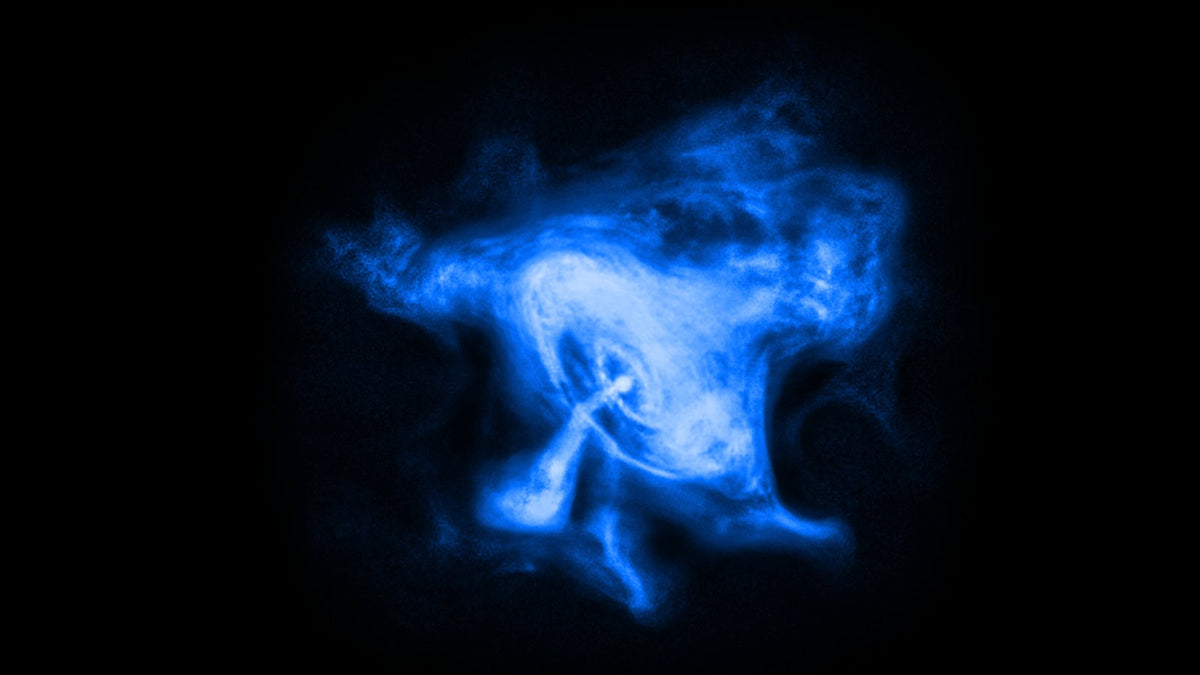
September observations test MIXS’s image sharpness before its Mercury science campaign. Explore how the instrument will combine X-ray fluorescence with measurements of solar illumination.
BepiColombo’s Mercury Imaging X-ray Spectrometer has used the Crab Nebula to test its performance in space. The instrument team’s announcement, dated November 20, reports September 11–12 observations and image sharpness slightly better than in laboratory tests in 2015. This is a calibration milestone, not a new chemical map of Mercury.
A familiar sky target tests the instrument

After separation of the Mercury Transfer Module in September, MIXS could look into space. The Crab became its first astronomical X-ray target. The sequence involved 55 spacecraft slews and 39 hours of observations. Measuring how broadly the target’s image spreads across the detector helps assess angular resolution: the ability to distinguish nearby features.
The comparison gives the team a check on the instrument after its long journey. It does not mean MIXS reproduces the detail in the archival Chandra image shown here, which comes from a different observatory. Nor does a successful sky observation by itself validate every step needed to turn Mercury measurements into elemental abundances.
How sunlight can reveal rock chemistry

MIXS is designed to collect X-rays emitted by Mercury’s surface. Leicester’s explanation of X-ray fluorescence describes the atomic process. A sufficiently energetic incoming photon leaves a vacancy in an atom’s inner electron structure. Another electron can move into that vacancy, releasing an X-ray whose energy depends on the element and the transition.
Sorting the detected photons by energy therefore reveals chemical information that a normal photograph cannot supply. The measurement is a spectrum, with characteristic signals associated with elements. The original illustration shows the flow of illumination and measurement, rather than a measured spectrum or the spacecraft’s actual geometry.
The Sun also changes. A stronger surface signal could reflect different illumination as well as different surface material. As the instrument team explains, the companion SIXS instrument measures the incoming solar X-rays so that the two datasets can be used together. Knowing what illuminated the surface is part of interpreting what returned from it.
Two channels connect coverage and detail
The MIXS optical system uses many tiny reflecting channels, with iridium-coated glass guiding X-rays towards a detector. An aluminium film blocks unwanted optical light. This approach has an analogy in a lobster’s eye, which also gathers light through many small reflecting structures.
The instrument has complementary channels. MIXS-C is a collimator with a broad field of view for wide coverage; MIXS-T is the imaging telescope for more detailed local work. The Crab observations test the telescope’s response. Coverage, spatial resolution and the amount of collected signal remain different aspects of an eventual map.
The Max Planck Institute for Solar System Research’s instrument description explains that these fluorescent X-rays probe the upper few micrometres of the surface. The intended measurements include elements such as magnesium, aluminium, silicon and iron. They will complement other observations rather than provide a direct view deep inside Mercury.
What this first result leaves to establish
The Leicester team reports that some instrumental effects remain under study and that commissioning will include optimisation. A calibration observation is one stage in that process. The release describes April 2027 as the planned start of the science phase; it does not report completed Mercury composition results.
The scientific aim is to connect elemental patterns with Mercury’s history. MPS describes combining chemical mapping with other spectral information about surface minerals. A spectrum identifies elemental signals, while their distribution supplies geographical context. Converting those signals into useful geological constraints requires calibration, illumination measurements and interpretation together.
Join the conversation