
JAXA sets phased H3 launch handover to Mitsubishi Heavy
The initial transfer covers H3-22 flights using LE-9 Type1A engines. MHI targets January 11 for Flight 11, while other configurations remain part of a later transition.
Japan’s space agency has agreed that Mitsubishi Heavy Industries will take over launch operations for the H3 rocket’s 22 configuration when it uses LE-9 Type1A engines. JAXA’s November 20 announcement describes a phased transition, with other H3 versions to follow after further discussions.
A change in responsibility
Mitsubishi Heavy, usually abbreviated MHI, already provides H3 launch transportation services. The new arrangement adds a different responsibility: acting as the launch operator under Japan’s law covering satellite launches and satellite management. JAXA had retained that operator role even on flights for which MHI supplied the transportation service.
Those roles should not be confused. Selling or delivering a launch service and being the legally designated operator describe different parts of the same mission. The announcement brings both roles together at MHI for the specified version of H3; it does not announce the transfer of every configuration at once.
What H3-22 means

The two digits describe propulsion hardware. H3-22 has two LE-9 main engines on its first stage and two SRB-3 solid rocket boosters alongside it. The illustration separates those counts from the flight number: Flight 11 identifies an individual mission, while 22 identifies the rocket configuration.
JAXA’s H3 technical overview describes a family of vehicles, with two or three first-stage engines, zero, two or four solid boosters, and a choice of fairings. The fairing surrounds the payload during the early part of flight. Selecting a configuration lets the launch system accommodate different payload sizes and destination orbits.
The engine designation also sets a boundary: the initial handover concerns Type1A. JAXA will continue developing Type2, with operations using that version subject to a later transition.
The next flight remains a plan
In a separate November 20 launch notice, MHI targets January 11, 2027 for H3 Flight 11 from Tanegashima Space Center. Its stated window is 08:00–10:00 Japan Standard Time, equivalent to 23:00 UTC on January 10 through 01:00 UTC on January 11.
Flight 11 will carry a Japanese government information-gathering satellite. MHI also lists a backup period from January 12 through February 28. These are planning dates, not confirmation that the rocket has flown or that the satellite has reached orbit.
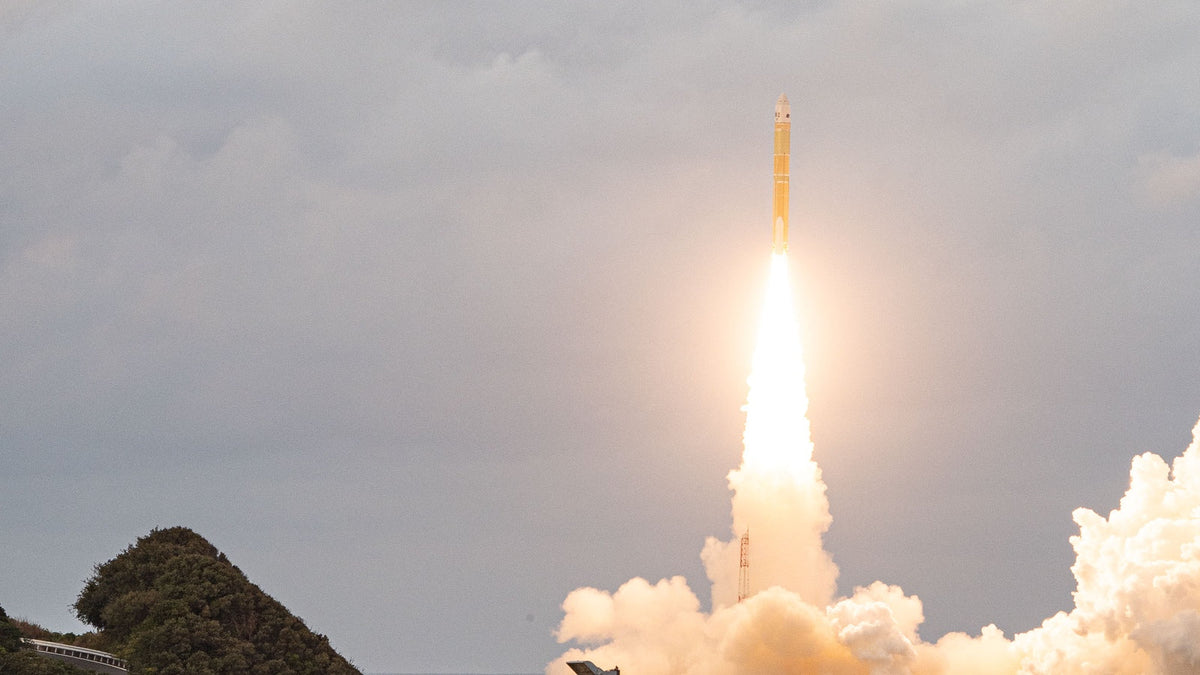
The photograph above shows an earlier H3 mission carrying Michibiki No. 6 in February 2025. It provides hardware context for the new announcement; it is not an image of Flight 11 or a November 2026 launch.
Programme goals and remaining work
JAXA presents flexibility, reliability and lower launch-service cost as H3 programme goals. Its overview describes an engine cycle chosen to reduce component count and susceptibility to abnormal combustion, alongside manufacturing techniques such as 3D printing. Those are design choices intended to support the programme’s aims. The operator change itself is not evidence of a particular price reduction or a new reliability figure.
For customers, the significant change is the organisation responsible for conducting the covered flights. For JAXA, development work continues alongside that operational transition. The next milestones are the planned Flight 11 launch and subsequent decisions about the remaining configurations.
Join the conversation